
Blog

  • Port Adelaide’s secret spots – 5 places to discover

    Port Adelaide’s secret spots – 5 places to discover

    There’s always something happening in Port Adelaide but this historic suburb still contains some hidden venues and cafes not yet on everyone’s radar.

    Whether you’re seeking a night out on the town, a quiet drink, or freshly baked goods, the Port has something to satisfy locals and visitors alike – and all within walking distance of each other.

    Milledge’s Distillation

    Opening in late 2022, this warehouse venue operated by a gin-distilling family has swiftly become a go-to for celebrating milestone birthdays and community events.

    A dog-friendly cafe by day serving up a mean toastie – the parmesan crust on the BLT is particularly tasty – the light and airy space with formica tables and mismatched chairs is relaxed and inviting.

    The hanging disco ball gives the game away to what happens after hours on the weekend when it turns into a bar, music venue, and party space for hire. Enjoy a bespoke beverage made with the family-owned small batch, hand-crafted gin or vodka, or one of the Greenock Brewers beers on tap.

    8A Todd St, Port Adelaide

    Studio 99 Art and Whisky

    New owners Amanda Kirby, Ben Conrades, and Donovan Christie took over the reins of Port Adelaide’s best-kept secret 12 months ago, seeking to maintain its core while expanding the drinks list and events. 

    Tucked away off Lipson Street, the former foundry’s rustic features are offset by crisp white walls, which are adorned with the work of local artists curated by Christie and rotated quarterly.  

    With a mission to boast 99 whiskeys, they cater to both novice and seasoned whiskey enthusiasts. But don’t worry – if whiskey isn’t your thing, you’ll find a decent selection of wine, beer, and a cocktail menu to enjoy in the front courtyard. 

    99 Lipson St, Port Adelaide

    10 Gallon Hat

    Since opening earlier this year, the new 10 Gallon Hat has brought contemporary bar vibes to St Vincent St with its subtle Mid-Western touches. 

    Co-owners Dylan Nettleton and Stacey Costopoulos did much of the renovation themselves on the 150-year-old building, which has been in the family for many years. They have successfully maintained its charm in keeping with the historical surroundings. 

    With a background in hospitality and managing bars, including Melbourne’s The Great Northern Hotel, Nettleton is keen to stock a range of craft beer, South Australian wines, and high-end liquor. The bar menu has been created by their friend Chris Smith, chef at Myrtle Wine Bar in Melbourne.

    158 St Vincent St, Port Adelaide

    Lipson Street Collective

    A blackboard A-frame sign on the footpath of a dusty Lipson Street is the only giveaway that there is a warm and bustling bakery inside the warehouse. Well used for baking in the past (it used to house Adelaide fav Soi Boi), a new collaborative baking venture has opened, specialising in sourdough and baked treats.

    Choose from traditional country-style, cranberry and walnut or a spicier jalapeno sourdough, focaccia, or inside-out grilled cheese sandwiches for your next carb fix. And you won’t be able to resist the sweet and savoury offerings of @butter.canteen bakers including carrot cake, brownies, cookies, ‘green’ pasties, sausage rolls and ham and cheese rolls. Heaven.

    49/51a Lipson St, Port Adelaide

    Dutch Coffee lab

    While it’s not much of a secret for Port Adelaide locals, this specialty coffee roaster and café serves up the best flat white in the whole of the Le Fevre Peninsula.

    The coffee is strong and comes with homemade Dutch baked treats (try the butter cake and Stroopwafel brownies), plus satisfying toasties served with a side of crisps. Their new cold drip will also get you through the hot South Australian summers too.

    255 St Vincent St, Port Adelaide
  • Why I love walking, and why I’m walking 30km in a day

    Why I love walking, and why I’m walking 30km in a day

    I love walking and I have a great stride, honed from years of trying to keep up with my tall dad as a child.

    A daily walk is nearly non-negotiable for me. It keeps me relatively fit and I can almost feel smug about not doing any other exercise.

    The benefits of walking are well-known. Just 30 minutes a day can: 

    • increase cardiovascular fitness
    • strengthen bones
    • reduce excess body fat
    • boost muscle strength 
    • reduce your risk of developing chronic disease
    • increase energy 
    • improve your mood, cognition, memory and sleep
    • help your balance and coordination
    • Strengthen your immune system
    • reduce stress and tension

    All great health benefits. But there are also creative ones too. 

    Creatives often cite walking and taking a shower as the time when ideas come together. The brain has time to connect the dots and come up with a solution when you’re not actively thinking about the problem. 

    In her book, The Secret Life of You, Kerri Sackville makes the case for finding more time to be alone with your thoughts. Walking is one such activity to do this, and she said it helped with her anxiety, stress levels, and overall wellbeing. 

    I don’t drive often so walking is my space to listen to podcasts. I basically have to go for a walk to keep up with the weekly episodes. It’s a good motivator but I know I should walk without the noise sometimes too – I’m sure my creativity would benefit. 

    In recent years I’ve leveled up my walking thanks to a passionate hiking friend and have embarked on some multi-day hikes. Almost 20 years since I hiked in Milford Sound, I tackled the Overland Track in Tasmania last year with seven other women. 

    I still crave getting those five days of phone-free time back and I’m sure my poor brain does too.

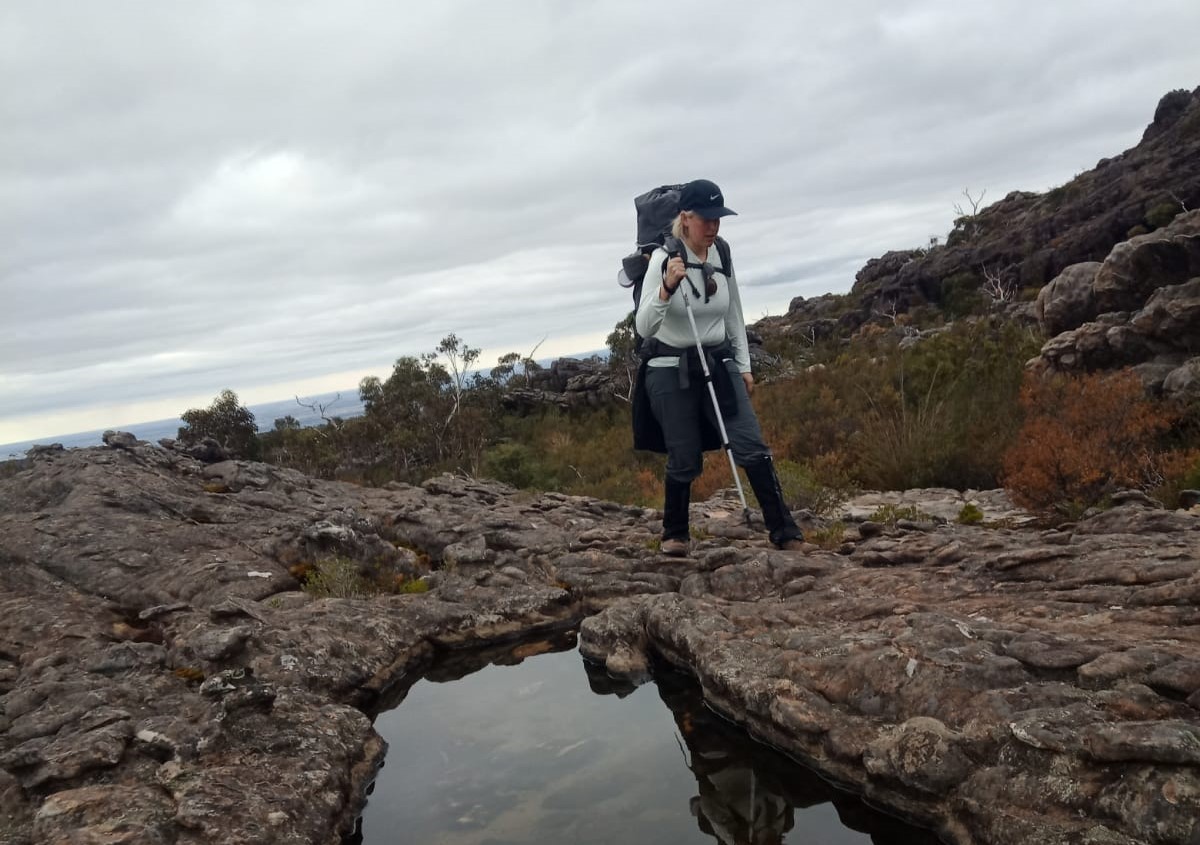
    Last month I walked a section of the Grampians Peaks Trail with my passionate hiking friend and another mate. 

    It was only three days and two nights, but it was tough. I was recovering from a bad sprain six weeks previously and so was a bit tentative on the diagonal rock trails. The views mostly made it worthwhile, as did the sheer beauty of the bushland. 

    The camping sites at Gar and Werdug are well set out, with tent platforms and an enclosed kitchen and seating area where you can keep a little warmer before seeking warmth in your sleeping bag.

    In August the same group will take on the Larapinta Trail – well, a five night section of it anyway from Brinkley Bluff Campground to Junction Campground.

    First up though, I have to walk 30km for the Coastrek Mornington Peninsula, raising money for the Heart Foundation to close the gender gap in heart disease. 

    Almost every hour of every day, an Australian woman loses her life to heart disease. On average that is around 20 women a day. More research is needed into women-specific factors to support the elimination of rheumatic heart disease (RHD) in Australian communities.

    You can find my team’s fundraising page here – our goal is $2k! 

  • Forget dinner – why breakfast will make your best travel memories

    Forget dinner – why breakfast will make your best travel memories

    A steaming, fragrant bowl of pho on the rooftop of a fancy Ho Chi Minh hotel takes me back to my 30th birthday celebrations and a week of eating and meandering.

    I had wanted to get away and treat myself to a (short) stay in a resort. The first stop was Rex Hotel, which served an intoxicating buffet of tropical fruit and pho cooked fresh on the top floor balcony, the sounds of the street below adding to the atmosphere. 

    It’s memories of breakfasts like these that pop up for me more often than some fancy dinner I might have had during my travels. Perhaps because breakfast comes with a more distinctive experience than sitting in another packed restaurant drinking overpriced cocktails. 

    Forget Michelin-star restaurants for dinners where you have to book months in advance or jostle with everyone else to get a seat in the piazza for overpriced Italian. 

    I think breakfast is the highlight meal when traveling – it’s cheaper, easier to get, and you can still get some great local food. 

    Or maybe it’s just because breakfast is my favourite meal. 

    Photo by Hong Anh Duong on Unsplash.

    The perfect time of day 

    When traveling you eat breakfast in a more leisurely way (unless you’re racing off to grab a sun lounge on the beach). You’ve got time to sit, look over the water and slowly wake up with your third espresso. 

    Breakfast is much more civilized – you’re not drained from a big day, hot and sunburnt, and four wines in. You’ve got the whole day ahead of you. And there’s something about the early morning hours that makes people more relaxed and friendly. 

    Breakfast can easily lapse into brunch or lunch territory, especially if you’re saving money and going for two meals a day instead. A plate of crepes, or a picnic gathered from the local market – bread, cheese, fruit, pastries while you lazily people-watch and soak up your surroundings. 

    Cheap as 

    With Australians spending an average of $5,000 for a holiday, forking out less for meals might also be a necessity. But instead of depriving yourself of a meal out each day, just change the time of it and automatically save. 

    You can’t go past a biscotti or pastry with a coffee for a few euros in many European cities, picked up at the local bakery or cafe and enjoyed in-house, the smells of soft warm pastry and sweetness all around you. 

    Or a bagel with cream cheese and smoked salmon will fuel a day exploring New York’s five boroughs. 

    And don’t discount hotel or hostel breakfasts either — there’s nothing more satisfying than filling up on cheese, salami, and bread in Geneva, or olives, cucumber, eggs and cheese in Turkey all-inclusive.

    Photo by Josh Withers on Unsplash.

    A truly local experience 

    We might not think of breakfast as having much variety – we are so used to toast, cereal or maybe stretching to a green smoothie. Many countries have unique breakfast dishes that you won’t find anywhere else.

    Instead of heading to a restaurant to check out the local fare, there’s no reason why you can’t get the same taste of what a country has to offer from a humble breakfast dish. 

    In Bali, it could be nasi goreng, and a platter of dragon fruit, pineapple and star fruit. 

    Or a plate of huevos rancheros in Mexico — a dish of eggs served with beans, tortillas, and salsa. Or try the breakfast taco (yes, there are dedicated ones for each meal) with ground mince and white beans. 

    Grabbing something from a local street vendor while having a leisurely stroll through city streets can be wonderfully satisfying. Spicy lamb wrapped in soft warm bread in Istanbul or freshly baked Koulouri in Greece.

    Making memories

    It was in a far less tropical environment where I had another memorable breakfast. My friends and I had been looking forward all week to a breakfast we’d seen advertised at the local diner in a slightly seedy part of downtown Toronto. 

    We really wanted to end our visit by overeating in true North American style, spending $10 each for plates piled high with bacon, eggs, hash browns, and pancakes which had to be brought out on separate plates. 

    It was deliciously over the top and I can still remember that breakfast nearly 10 years on.

    So next time you’re planning a trip, make sure to prioritise breakfast. As the saying goes, 

    ‘Breakfast like a king; lunch like a prince; dinner like a pauper”.

  • Port Douglas made simple: Everything you need to know

    Port Douglas made simple: Everything you need to know

    Since coming back from Cairns and Port Douglas I’m a bit of a convert. Those windy roads hugging slivers of sand, rocky pools and yes – the cliched-but-real – turquoise seas with the forest creeping down to it. There’s lots to do and it can get busy, so here’s what to know when planning a trip with the family.

    When to visit 

    Port Douglas is one of the go-to Queensland destinations, particularly for those down South escaping the cold, making peak season during the dry from June to October. The family and I went in August and it did seem like everyone in Melbourne was also there but according to one boutique employee, ‘avoid the September school holidays’. August seemed to be a sweet spot with consistent 26 to 27 degree days. 

    Getting around and where to stay 

    We flew into Cairns and decided to hire a car to make life easier with a kid and allow us more freedom to do some exploring further afield. You can get a transfer straight from the airport to Port Douglas though and if you’re planning just to chill by the pool and beach then it’s as easy option. 

    We spent one night in a resort for a bit of luxury but really, for us – two adults and one pre-schooler, a cabin in the Big4 Port Douglas Glengarry Holiday Park was actually more comfortable and suited our needs better. It’s a bit outside the town but with a car that wasn’t a problem. 

    Book everything – no, really

    Before heading up there I did get an email from one of our accommodation providers saying things were a bit busy in Port Douglas post COVID lockdowns and lots of places were experiencing staff shortages so it was advised to book ahead. 

    I did not take that as seriously as I should have because once there you realise that staff shortages and high demand make booking a necessity. Luckily there are plenty of hole-in-the-wall coffee places to at least get you a coffee with Sparrow Coffee serving a rare cold brew. The Whileaway Bookshop and Cafe does a brisk trade in hot drinks and cake surrounded by a great selection of books. There are also two pubs at the end of the main strip (Macrossan Street) that are your best bet to get a meal if you didn’t get around to booking.  

    Food with a view

    If you can book ahead there are some great options offering gorgeous tropic views. Housed in a train carriage, Choo Choos at the Marina is a unique setting for a light lunch, while Hemingway’s Brewery is a safe bet for dinner and sunset viewing. St Crispins is a lovely brunch spot on the water with a view to the Daintree Ranges – and even some friendly crocodiles as dining companions.

    And although not technically in Port Douglas, I would highly recommend booking lunch at NuNu in Palm Cove either on the way to Port Douglas or the way back, it’s a must-do stopover. The restaurant is a little fancy but not pretentious, and has a comprehensive kids menu with a hearty Bolognese. It’s relaxed, the service is great and the food is delicious.

    It’s worth going beyond Mossman Gorge

    Visiting Mossman Gorge is an easy morning or day trip, about 20 minutes drive from Port Douglas. From the visitor centre you get a bus up to the Gorge, and then you can spend some time in the shallow waters of the Gorge itself, and walk the loop around. 

    If you can, plan another day exploring the Daintree Rainforest – the Eastern Kuku Yalanji people have taken back formal ownership of the world heritage-listed rainforest in recent years. 

    The trip up and the ferry across (plan to go early) is worth it alone for the lush vegetation and Jurassic forests. Stop at the Daintree Discovery Centre and enjoy the view from the tree top platform. 

    Driving through is an interesting experience – there are lots of houses nestled back off the road, obscured by the forest. It’s home to many residents who live there off grid. 

    Oh, and spend a minute in Cairns 

    Many visitors to Port Douglas head straight there as soon as they land at the airport in Cairns, but it is worth spending a night or two here as well. While you might not be able to dip your toes in the sea for fear of crocs, you can instead hang out along the beautiful esplanade which includes playgrounds, cafes, volleyball courts, waterplay and a fantastic man-made lagoon. 

    Add in the aquarium, a boat cruise out on the reef and the Skyrail Rainforest Cableway, and you’ve got plenty to fill a few days. 

  • Support you need for the fourth trimester 

    Your baby has arrived and you may be at home recovering – now what? A lot of planning goes into getting the nursery ready and working out a birth plan, but once the fourth trimester is here, you might be struggling and feeling a lack of ‘the village’ around you.

    While having a group of friends and family to call upon in those weeks would be the ideal, for many it’s not always realistic.

    Many parents are turning to using a mix of family, friends, community services and paid care to make up for a lack of village.

    Why you might need support in the fourth trimester

    Support in the first few months after a baby is born is crucial. Research showing that mothers who are better supported by family, friends, or other support in the postpartum have better mental health and overall recovery.

    While practical and emotional assistance can help buffer the effects of postpartum stress, research in Health Psychology Open shows the levels and quality of support for many new mums is inadequate.

    As a new parent, you may deal with the arrival of their baby along with work and keeping a household going. For tired parents, finding support to lean on can be tricky without family around. It’s important to both be involved in planning, preparing and working out who can do what.

    This need is finally getting some attention, with a wide range of services now available for parents who want to build their own support system and fill the gap in post-partum care in the fourth trimester.

    Post-partum support services to consider in your planning

    Get support to run your house

    • Cleaner – getting someone in even once a fortnight can help you feel on top of things. Ask around for a referral and get them to concentrate on those areas that ill make the biggest impact – ie the kitchen, bathroom and floors.
    • Washing – some house helpers can also help with washing, or you might have someone locally who takes in washing and ironing.
    • Help with meals. Your freezer stash of pre-cooked meals can quickly dwindle in those hazy months of the fourth trimester. To get you through, consider ordering some meals in through a service, or something like HelloFresh to keep things simple. If outsourcing isn’t in your budget, consider organising a schedule where friends, family or neighbours take turns dropping off home-cooked or delivered meals during the first few weeks.

    Helping with the baby

    • postpartum doulas – many might think doulas are only there before and during the birth but more are now offering support for after. This can include bringing or cooking food, helping to tidy up around the house and holding the baby and taking them for a walk while mum sleeps.
    • lactation consultant – for people struggling with feeding, having a consultant visit you at home can be helpful to discuss any issues and provide support in some tough times. Further support can be found from the Australian Breastfeeding Association.
    • Night Nanny or Maternity Nurse – for those who can budget for this, a qualified professional can come and help you with settling a baby so you can get some sleep. This service can be extremely helpful for single mums, those who don’t have family nearby or if a partner works night shift.
    • parent groups – If you can, attend the post-natal parenting classes put on by your local community health centre. These usually run through practical ways to care for your baby and allows you to talk to a midwife and fellow new mums and dads.

    Care for mum

    • respite retreats – if you need extra support in the days following birth, there are a number of specialised places you can go with your baby to rest and recuperate, including Borne in Sydney and Homb in Melbourne.
    • clinical care like visiting an osteopath or women’s health physiotherapist regularly to help in your recovery. In recognising the specialist care required for women post-partum, clinics like Juno Specialists in Melbourne have assembled a team of health experts to assist women after they have their baby.
    • emotional support, including Pregnancy, Birth and Baby – a national Australian Government service

    Planning support with a small budget

    Outsourcing or paying for support might not be accessible for everyone in the post-partum period.

    When planning for the fourth trimester, think about those areas that would make a big difference to you – whether that’s help around the house or food preparation. It’s also important to prioritise clinical care if you require it after birth to help in recovery.

    What I need help withWhat to arrangeBack up option
    HouseworkA cleaner to come in once a monthShare duties with your partner if you can, ask a family member to come and help with the washing.
    Help with dinnerUse a service like HelloFresh once a fortnight to make a few meals easier.Stock up the freezer as much as you can before the baby comes or ask some friends to drop meals over if they can.
    A bit of everythingA doula for the number of sessions you can afford so they can help with some house tidying, cooking and holding the baby so you can get some rest.See if you can arrange for family and friends to come over and do some of these tasks to help you out.

    Whether you’re planning for the fourth trimester, or you’re already in it, start by choosing one support priority from your list